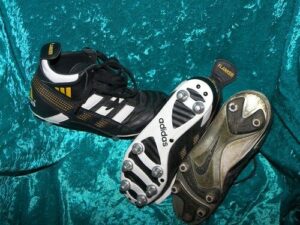
Basketball requires specific footwear to enhance your performance on the court, while soccer demands a different approach for optimal traction on the field. When I evaluate basketball cleats, I look for features that provide support and stability during quick lateral movements. Conversely, for soccer, the right cleats should offer flexibility and grip on grass or turf, as the game involves sprinting and changing direction rapidly. Making the right choice can significantly impact your comfort and effectiveness in each sport, so understanding these differences is key to improving your game.
Key Takeaways:
- Basketball cleats provide ankle support and traction for vertical jumps and quick lateral movements.
- Soccer cleats are designed for agility and traction on grass or turf, focusing on a lightweight feel.
- Choosing the right footwear depends on the specific demands of the sport you are playing.
Designing for the Game: Key Differences between Basketball and Soccer Cleats
Each sport demands a unique design in footwear, with basketball cleats optimized for explosive movements and lateral support, while soccer cleats focus on agility and traction across playing surfaces. Basketball cleats often feature a higher cut to provide added ankle stability during quick direction changes and jumps. In contrast, soccer cleats are crafted to be lower and more streamlined, allowing for greater flexibility and natural foot movement. The differences in these designs directly influence how players engage with their respective sports.
Traction and Grip: Tailoring to the Surface
Traction is engineered differently for basketball and soccer cleats. Basketball shoes utilize rubber soles with herringbone patterns that grip smooth courts, enabling swift pivots and sudden stops. Soccer cleats, equipped with studs or bladed patterns, dig into the grass or turf, providing stability on uneven surfaces. This tailored traction ensures that players can maximize their speed and agility without compromising safety.
Ankle Support: Protecting Against Injuries
Injury prevention significantly shapes the design of ankle support in basketball and soccer cleats. Basketball shoes typically feature a higher silhouette, which helps prevent ankle sprains from lateral movements and abrupt landings. Soccer cleats, designed for flexibility, often provide lower support, allowing for more natural ankle movement. While this design enhances agility, it requires players to be more conscious of their footing to avoid injury.
Higher ankle support found in basketball cleats is especially important as studies show that players engaging in sports with frequent jumps, such as basketball, face a 50% higher risk of ankle injuries. The extra material around the ankle helps stabilize the joint during strenuous movement, effectively reducing this risk. Conversely, soccer players must balance agility with support; choosing cleats that fit snugly while providing adequate protection against lateral strains is vital for maintaining peak performance on the field.
Performance Under Pressure: Evaluating Material and Construction
The material and construction of footwear significantly impact performance, especially under demanding conditions. For basketball, materials need to provide both traction and ankle support, while soccer cleats prioritize a snug fit and ball control. Understanding the specific requirements of your sport will aid in selecting footwear that enhances your game, allowing for optimal movement and stability.
Breathability vs. Durability: The Material Debate
In the ongoing debate between breathability and durability, the choice of material plays a vital role. Basketball cleats often feature synthetic uppers designed for breathability, necessary for intense play, while sacrificing some durability. Conversely, soccer cleats use premium leather or advanced synthetics that provide both resistance to wear and a close fit, contributing to touch and control during play. Ultimately, the right material balances these factors according to your playing style.
Weight and Flexibility: Optimizing Movement
A lightweight shoe often enhances performance, allowing for quicker movements and less fatigue. Flexibility is key; you want your footwear to move naturally with your foot at high speeds. In basketball, low-cut styles are popular for their minimal weight, while soccer cleats emphasize a flexible sole to adapt quickly to changing field conditions. Finding that perfect balance aids in maintaining speed and agility throughout the game.
Weight directly influences your agility on the court or field. While basketball players benefit from the quick movements facilitated by lighter shoes, soccer players thrive on flexibility that allows for swift dribbling and rapid changes in direction. Many high-performance soccer cleats weigh less than 7 ounces, enabling you to cover ground effectively without the burden of heavy footwear. Focus on shoes that offer structural support without excess weight, as every ounce can impact your overall performance during high-pressure moments of play.
Fit and Comfort: Finding Your Perfect Match
Achieving the right fit and comfort while selecting footwear can significantly impact your performance on the field. I’ve found that a snug yet flexible fit not only enhances my movement but also reduces the risk of blisters and injuries. Whether you opt for basketball or soccer cleats, exploring various brands and models can lead to discovering the perfect pair that caters to your unique foot shape and playing style.
Sizing Considerations: Personalizing Your Fit
Each brand offers different sizing standards, so trying on multiple pairs may be necessary to achieve your desired fit. I recommend measuring both feet, if necessary, and always choosing the size that accommodates the larger foot for optimal comfort. Pay attention to how the cleat feels in width and length; a snug fit ensures stability without sacrificing circulation, so adjustments like thicker socks might be important for fine-tuning.
Arch Support and Padding: Enhancing Comfort
Quality arch support and adequate padding in your cleats play a significant role in overall comfort. Finding the right amount of cushioning can reduce fatigue during extended wear, allowing me to focus on the game without distraction. Selecting models that incorporate advanced materials, such as memory foam or gel inserts, can provide personalized arch support tailored to your foot’s unique contours.
Choosing footwear with superior arch support and adequate padding is vital for your performance and comfort levels. Opting for cleats featuring technologies like cushioned midsoles or extra arch support can enhance your game. For instance, certain basketball models employ Nike’s Zoom Air technology, which provides responsive cushioning. Soccer cleats often integrate specialized foam in high-impact areas to reduce fatigue. Ensuring your cleats have the right cushioning can mean the difference between a comfortable playing experience and one marred by soreness and distractions.
The Influence of Playing Style: Matching Footwear to Your Game
Your playing style significantly influences the footwear you choose. An explosive player may benefit from lighter basketball cleats that provide agility and speed, while a more methodical, tactical approach in soccer could require cleats with superior traction and stability. The specific demands of your game—like quick cuts or powerful sprinting—dictate whether you need extra support or a focus on flexibility, making personalized selection crucial.
Playing Position and Footwork: Customizing for Strategy
Impact of Player Preferences: Subjectivity in Selection
Personal preferences play a crucial role in selecting footwear. What feels comfortable to one player may be different for another, making subjective assessment vital. Some players may prefer a snug fit for added control, while others opt for looser cleats for a relaxed feel. These preferences can be influenced by factors like previous injuries, personal experiences with particular brands, or even aesthetic choices that contribute to confidence on the court or field.
Individual choice impacts performance, as players often select footwear based on their unique experiences. For instance, if I find a specific brand’s cushioning aligns perfectly with my play style, I’m likely to stick with it, regardless of the latest trends. Studies show that players who wear shoes they personally like perform better, as comfort breeds confidence. Therefore, understanding what works for you is key, reflecting the balance between personal style and performance requirements.
Brand Innovations: Exploring Cutting-Edge Features
Footwear brands are constantly pushing the envelope with innovative technologies to enhance athlete performance. The latest models include features like responsive cushioning, breathable mesh uppers, and customizable fits that cater directly to specific player needs. Brands are integrating smart technology as well, with some shoes equipped with sensors that track metrics like speed and distance, providing you with valuable data during training and games. This ongoing evolution reflects a commitment to marrying style and function.
Technology in Footwear: Boosting Performance
Advanced technology plays a pivotal role in modern footwear, delivering benefits like improved traction and energy return. For instance, shoes with carbon fiber plates can enhance propulsion, while anti-microbial insoles help maintain freshness throughout intense sessions. Brands are also experimenting with lightweight materials that offer support without weighing you down, important for fast-paced sports like basketball and soccer. Adopting these innovations can give you a distinct edge on the field or court.
Popular Brands: A Closer Look at Reputation and Reliability
Brand reputation is vital in footwear selection, as trusted names tend to deliver consistent quality. Brands like Nike, Adidas, and Puma dominate the market, known for their commitment to innovation and athlete feedback. Each brand has carved out a unique identity; for instance, Nike is recognized for its research-driven designs, while Adidas emphasizes sustainability without sacrificing performance. Opting for reputable brands ensures you receive reliable footwear tailored to your athletic needs.
The reliability of popular brands often stems from their dedication to athlete collaboration and extensive R&D. Nike, for instance, has worked with top athletes to refine their basketball sneakers, resulting in models like the LeBron series, which offer unparalleled support and traction. Adidas has similarly partnered with football athletes to develop cleats that focus on speed and agility, exemplified by the Adizero line. These relationships allow brands to constantly upgrade and innovate, ensuring that you’re investing in footwear that meets both performance and comfort standards.
Summing up
Summing up, choosing the right footwear is crucial for optimizing your performance on the court or field. I understand that basketball cleats provide the necessary ankle support and grip for quick lateral movements, while soccer cleats offer agility and control on grass or turf surfaces. By considering the specific demands of each sport and your personal playing style, you can ensure that your shoes enhance your game and keep you comfortable throughout. It’s important to choose wisely to match your athletic needs with the appropriate footwear.
FAQ
Q: What are the main differences between basketball cleats and soccer cleats?
A: Basketball cleats are designed for indoor court surfaces, offering ankle support and a flat sole for quick lateral movements. Soccer cleats have studs for traction on grass or turf, promoting speed and agility while providing optimal ball control.
Q: Can I use soccer cleats for basketball or vice versa?
A: While you can use soccer cleats for basketball, they may not provide adequate ankle support or cushioning. Using basketball cleats for soccer may hinder performance due to lack of grip and control on the field. It’s best to use the appropriate footwear for each sport.
Q: What factors should I consider when choosing between basketball and soccer cleats?
A: Consider the playing surface, your playing style, and the level of ankle support you need. Basketball cleats are better for stability and support on indoor courts, while soccer cleats prioritize traction and agility on outdoor fields.